(Click thumbnails for full size images.)
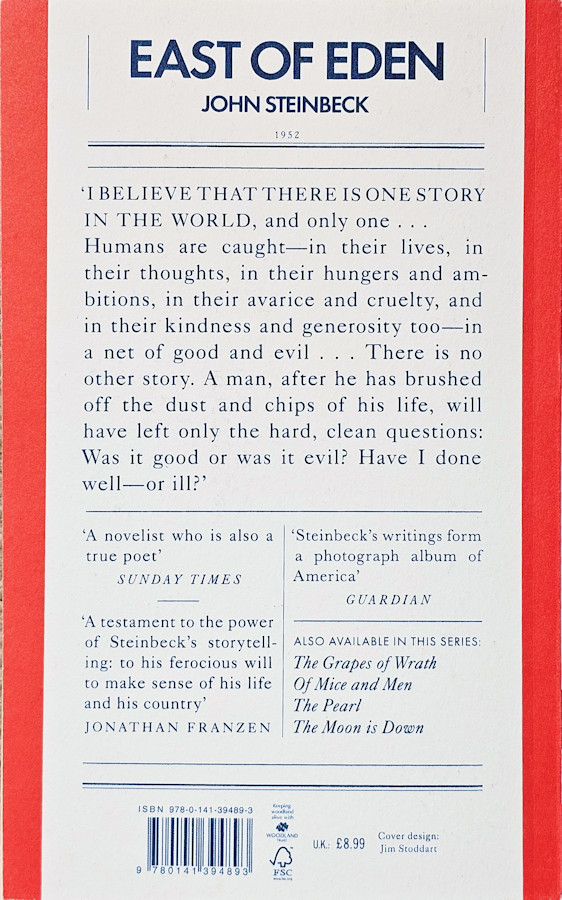
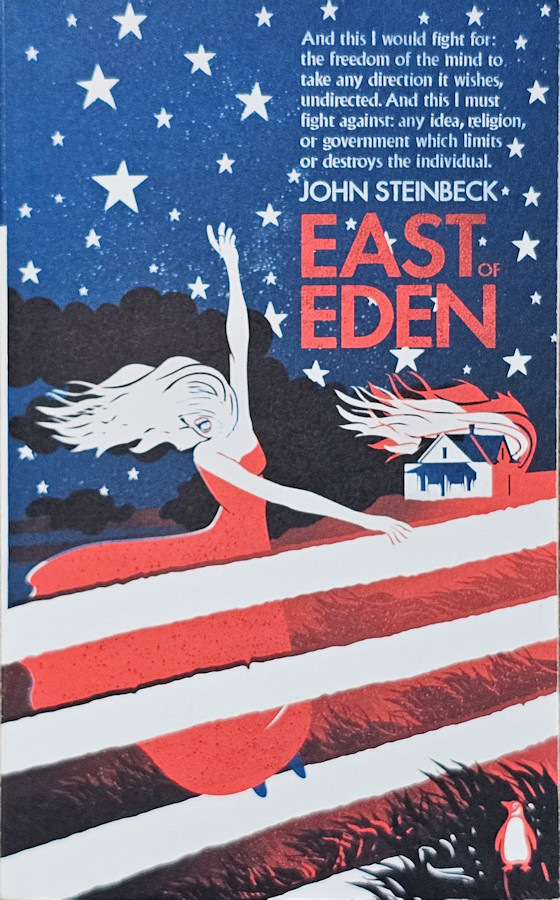
| "East Of Eden" by John Steinbeck was written between January and November of 1951, and was published on 19th September 1952. |
|
'I BELIEVE THAT THERE IS ONE STORY IN THE WORLD, and only one ... Humans are caught-in their lives, in their thoughts, in their hungers and ambitions, in their avarice and cruelty, and in their kindness and generosity too-in a net of good and evil ... There is no other story. A man, after he has brushed off the dust and chips of his life, will have left only the hard, clean questions: Was it good or was it evil? Have I done well-or ill?' |
|
The primary link between John Steinbeck's novel and the Scottish rock band Big Country is their 1984 hit song "East of Eden", written by frontman Stuart Adamson, and released as the lead single for their
critically acclaimed second studio album, "Steeltown".
Key Connections & Overlaps |
|
The Title & Lyrical Imagery: Stuart Adamson used the title and geographic metaphor of the book to explore themes of hardship, isolation, and moral conflict. The lyrics mirror the book's dualistic
view of the world: "I looked west in search of freedom / And I saw slavery / looked east in search of answers / And I saw misery".
The Concept of the "East of Eden": In both the book (referencing the biblical land where Cain was exiled) and the song, "East of Eden" represents a harsh, unforgiving landscape where people must struggle to survive. While Steinbeck focused on California's Salinas Valley, Adamson applied the metaphor to the industrial decline and struggles of the working-class in 1980s Thatcherite Britain. The Music Video Context: The Official Music Video for "East of Eden" explicitly links the song to the book's timeline. The video's narrative begins with a title card setting the scene in 1952 - the exact year John Steinbeck published "East of Eden". It concludes with a quote tracking the passage of time: "Some days will stay a thousand years, some pass like the flash of a spark... Who knows where all our days go?". |
| The single "East of Eden" entered the UK Official Singles Chart on 29th September 1984, spending a total of 7 weeks in the Top 100, peaking at No. 17. Whilst it didn't reach the Top 10 like some of their earlier work, it served as a successful lead track for their follow-up album, "Steeltown", which debuted at No. 1 in the UK later that October. |